For my second BCM114 digital artifact, I decided to promote UN Sustainable Development Goal 12, Sustainable Consumption and Production, by sharing my journey starting with ‘Project Pan’ through a series of TikTok videos. If you haven’t heard of it, ‘Project Pan’ is an internet challenge that involves using up beauty products until they are empty before purchasing anything new. Now, although this might seem self-explanatory, in the age of social media and fast-moving trends, overconsumption in the beauty industry has become increasingly common.
Through sharing my journey, starting the challenge on TikTok, as well as experimenting with the framing theme, template media by sharing a project pan progress tracker, I aimed to encourage others to really think about their shopping habits and to even participate in ‘Project Pan’ themselves.
In this post, I will be going over my process of developing, prototyping and testing my digital artifact and sharing some of the challenges I faced along the way.
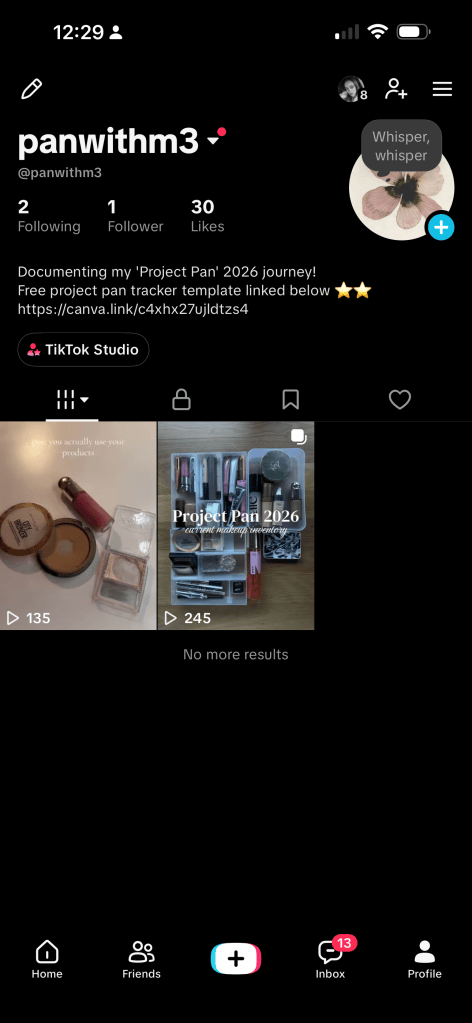
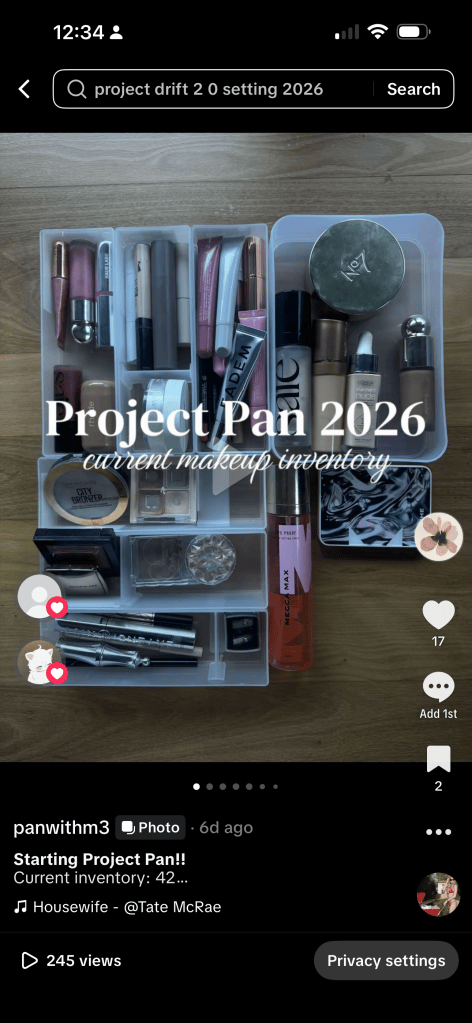
Images Via: @panwithm3 on Tiktok
Coming Up With a Concept
When brainstorming ideas for a DA concept, I immediately knew I wanted the focus to be on SDG12 (Sustainable Consumption and Production). In the past couple of years, I have seen an increase in massive shopping hauls, product wastage and beauty brand marketing campaigns that encourage overconsumption on social media platforms, particularly on TikTok. Beauty brands constantly create new products to match fast-moving trends, which are then promoted by thousands of influencers, encouraging consumers to keep buying new products.
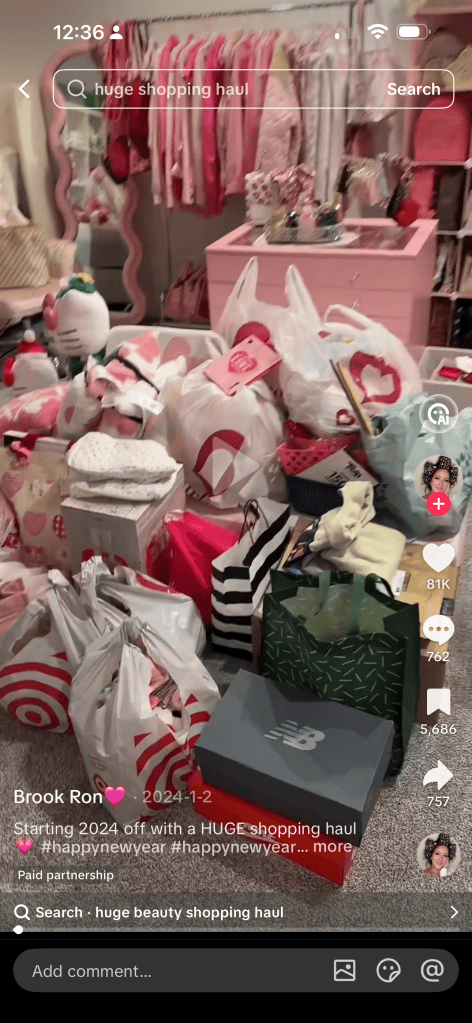
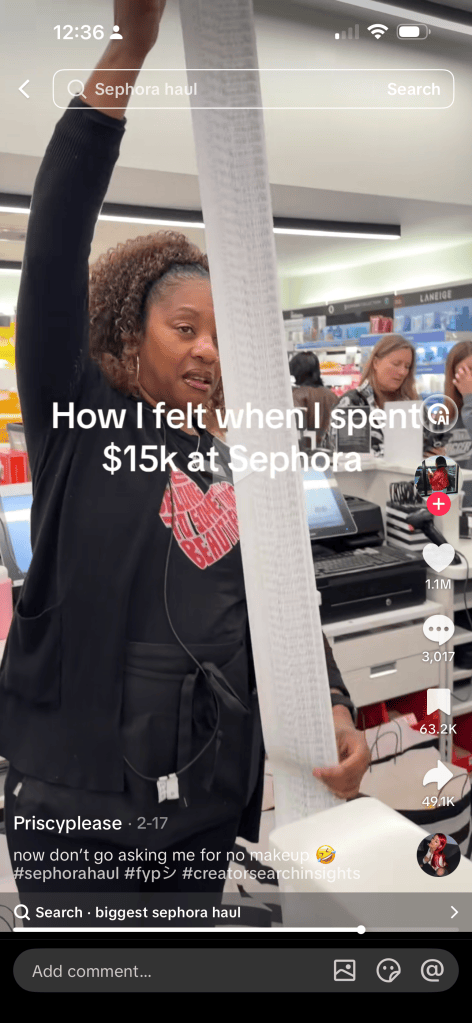
Images Via: @BrookRon & @Priscyplease on Tiktok
As someone who regularly engages with beauty-related content on social media, I have become increasingly aware of how big of an issue overconsumption in the beauty industry is. Considering I wanted to explore a topic for my DA that I could personally connect with, I thought this would be a great focus for my project. I remember coming across social media content regarding ‘Project Pan’ a while back, and I became really interested in the challenge as I saw how big of an impact it had made on people’s habits of overconsuming and how it encouraged them to develop more sustainable consumption habits by making use of the products they already have.
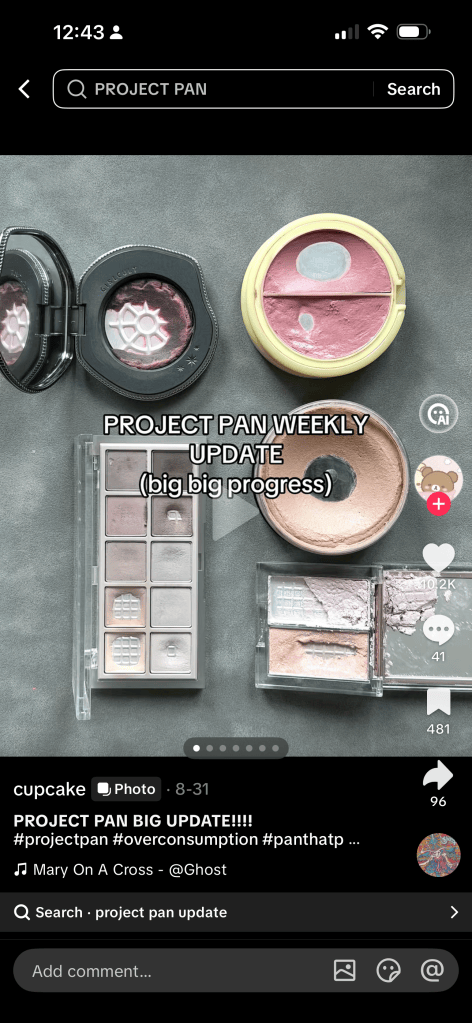
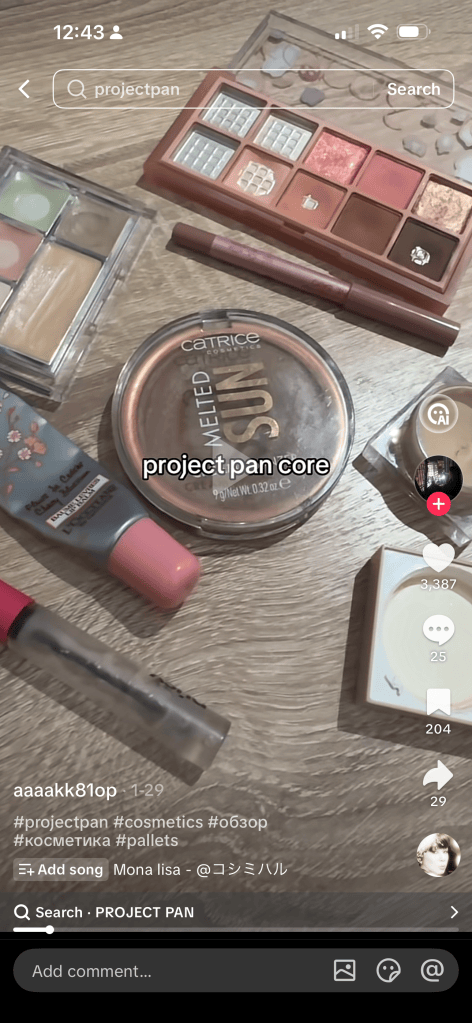
Images Via: @cupcake & @aaaakk81op on Tiktok
The more that I thought about it, the more I realised how much of an impact ‘Project Pan’ has made on my own shopping habits and how hearing about the challenge has shifted the way I think about using what I already have. For this reason, thought it would be a really great idea to make this the focus of my DA. I hoped that sharing my own personal journey with the challenge would encourage others to participate, allowing them to really consider how their shopping habits might be impacting the environment.
Experimenting with Template Media
After developing a concept for my DA, it was time to think about how I could incorporate template media into the project. I thought it would be a good idea to provide my audience with a resource that would hopefully encourage them to participate in the challenge themselves rather than simply documenting my own journey and leaving it at that. This is what brought me to the idea of creating a ‘Project Pan’ progress tracker, which would provide my audience with a simple way to track their progress in completing the challenge themselves.
When it came to deciding on a platform to create the template on, my main criteria was that it needed to allow other users to edit it themselves. After conducting initial research, I decided to experiment with Canva and Notion, as both platforms allow you to share a design that can then be edited by other users.
When designing the template itself, I wanted to make sure that it was both practical and visually appealing. I first created a mood board on Pinterest, consisting of templates that others had created to gain inspiration for a colour palette and general layout. I decided to keep the design clean, minimalistic and modern to ensure that it would be clear and easy to understand.
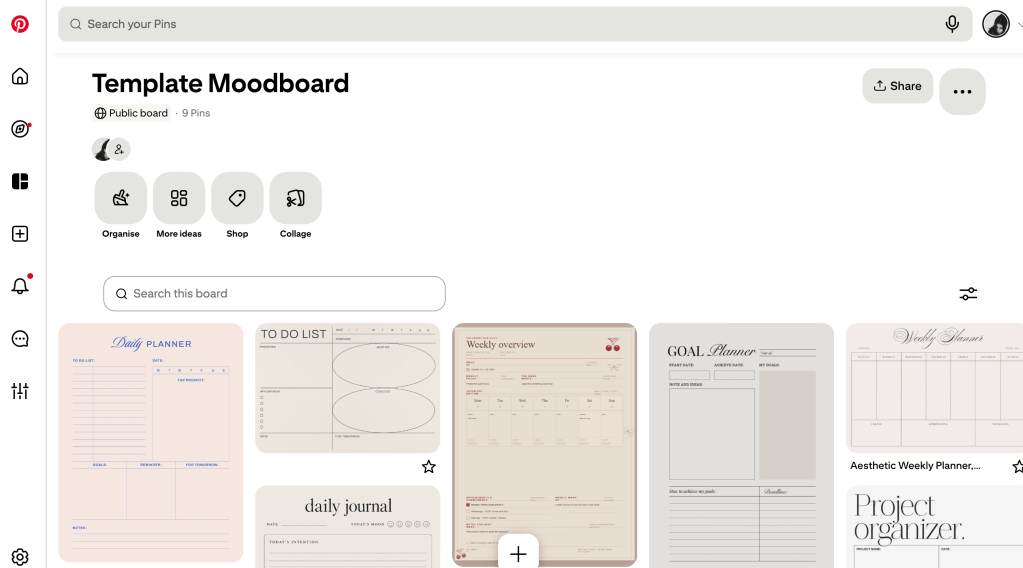
Screenshot: My mood-board via Pinterest
In terms of deciding what I wanted the contents of the template to include, I considered what features would be most useful to someone participating in ‘Project Pan’. I decided to make it a monthly tracker, as I thought having an entire year’s worth of products on a single tracker might become too overwhelming and confusing for the person using the tracker. I designed the tracker in a ‘table-like’ format where users could enter the names of each of their products into each row, and then each column represents a week in the month. I’ve then provided a key in the top right corner to show what each progress symbol represents. By adding each of these features, I hoped that my template would provide users with a simple and effective way to track their ‘Project Pan’ progress. In experimenting with template media for this DA, I began to understand the importance of functionality in templates and how aesthetics aren’t the only important aspect of a template.
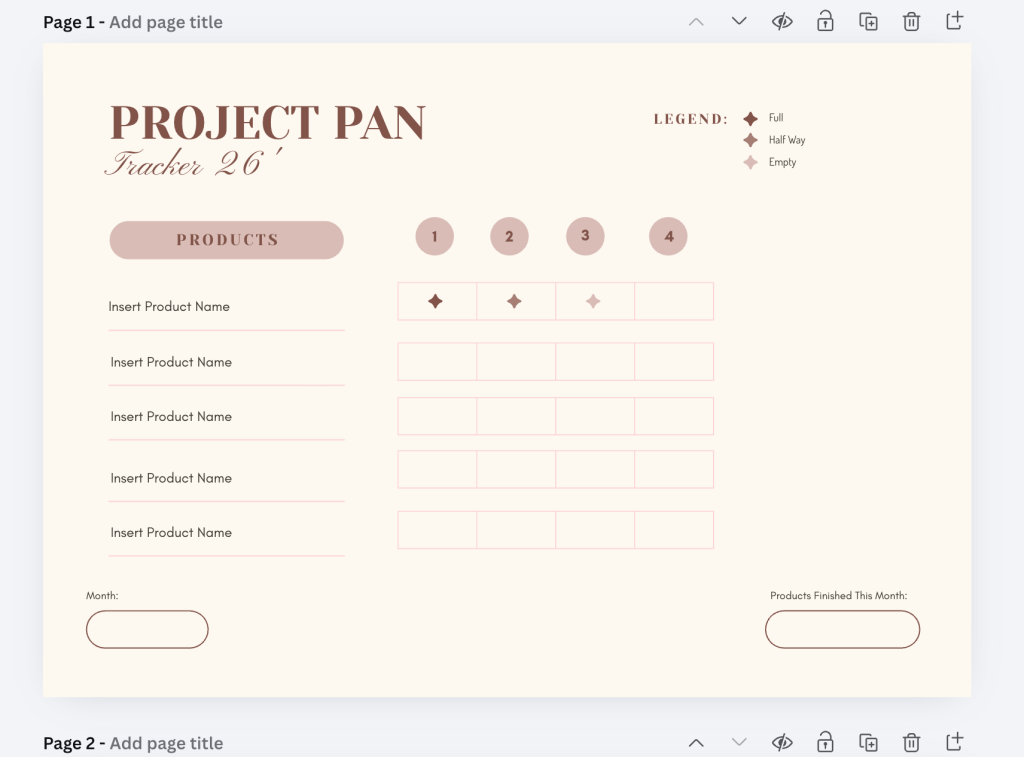
Screenshot: My Final Template created on Canva
As part of my process this round, I participated in a peer discussion with Lexi Feldman, Elly Tyldsley, Connie Emmett and Elenor Tredinnick. I found it helpful to converse with my peers, as some of us selected the same framing theme and SDG, so we had been facing similar challenges. It was good to hear about how they were progressing with their DAs and the different approaches everyone had taken to their framing themes. The peer discussion allowed me to reflect on how my DA was progressing and to consider different approaches to certain aspects of development.
Link to our peer discussion: https://youtu.be/oM64FQfN7qs?si=cWawmlxBYuNwHtVc
Key Takeaways from this Round
Something I took away after working on this project was the importance of relatability in content. I believe that the factor that created the greatest impact in my project was keeping my content relatable by highlighting how a small change in everyday habits truly can make a great impact on overconsumption. Before I started my DA, I thought that the factor that would have the biggest impact was sharing the ‘Project Pan’ tracker, as it provided my audience with a simple and straightforward way to start their own ‘Project Pan’ journey. However, this was not the case. Instead, I believe that raising awareness of the challenge in a relatable way is what created the greatest impact.
In terms of contributing to and promoting Sustainable Development Goal 12 (Responsible Consumption and Production), I believe that through my project I was able to raise awareness about overconsumption in the beauty industry and encourage others to consider their consumption habits. However, whilst I believe I contributed to SDG 12 in some way, I am also aware of the limitations of the impact my DA has made. Initially, I hoped that by creating ‘Project Pan’ related TikToks, I’d reach a larger number of people. However, my content ended up receiving a relatively low number of views and little engagement. Additionally, whilst I aimed to encourage others to participate in the challenge and be more sustainable consumers, it is difficult for me to measure whether or not I was actually successful in this. Whilst I had hoped to use Canva creator analytics pages to measure the success of my DA, my Canva template didn’t end up receiving any direct engagement. Therefore, I cannot be sure that my audience found the template useful or that I created any form of behavioural change.
Overall, this process made me realise that raising awareness and creating behavioural change are two entirely different things. So whilst I believe that my DA may have contributed to a rise in awareness of sustainable beauty consumption habits, it is difficult for me to measure whether or not my project has had any impact on the larger issue of overconsumption in the beauty industry.
If I were to give advice to anyone who is interested in pursuing a similar project, I’d encourage them to select a topic they are genuinely interested in and have some form of personal experience with. I believe having a genuine interest in sustainable product consumption is what allowed me to stay motivated throughout the process of developing my DA. Additionally, I would recommend starting to post content as early as possible, as the more content they post, the more statistics they’ll have to determine whether or not their project has been successful.
Here is my final DA tiktok account: @panwithm3 on Tiktok
Check it out if you are interested!
References:
United Nations Department of Economic and Social Affairs, 2015, Ensure sustainable consumption and production patterns, United Nations Department of Economic and Social Affairs, viewed 1 November 2026 <https://sdgs.un.org/goals/goal12>
Adams, D 2025, This viral video trend could reshape U.S. consumer behaviour in 2025—or even your wallet, Fortune Media IP Limited, viewed 1 November 2026 <https://fortune.com/article/what-is-project-pan/>


Leave a Reply