For my first BCM116 Digital Artifact, I decided to explore how I could make healthy eating more accessible to those on a lower budget/income. Inspired by Sustainable Development Goal 2: Zero Hunger, I created a TikTok account on which I shared nutritious yet affordable meal ideas and demonstrated how I personally save money whilst still managing to eat healthy.
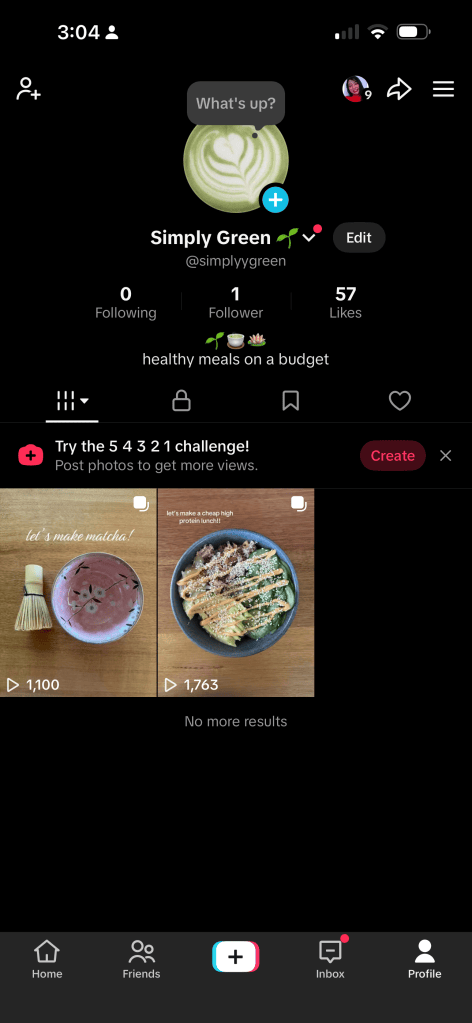
I wanted to base my DA on Sustainable Development Goal 2, which aims to create a world free of hunger by 2030. According to the United Nations Sustainable Development Goals, it is currently projected that more than 600 million people worldwide will still face hunger in 2030, which highlights the ongoing issue of food availability across the globe. Therefore, I wanted to share practical and budget-friendly ways to maintain a nutritious diet in an attempt to demonstrate that eating healthy doesn’t need to be expensive. I chose to explore viral media through my digital artifact because my goal was to reach as wide an audience as possible.
To begin the development of my DA/Start my mapping process, I first conducted research on how I could relate my project to one of the 17 UN Sustainable Development Goals. At first, I believed my project would most suit SDG 3: Good Health & Wellbeing, but after looking into each Sustainable Development Goal, I realised that Goal 2: Zero Hunger was more relevant to my digital artifact.
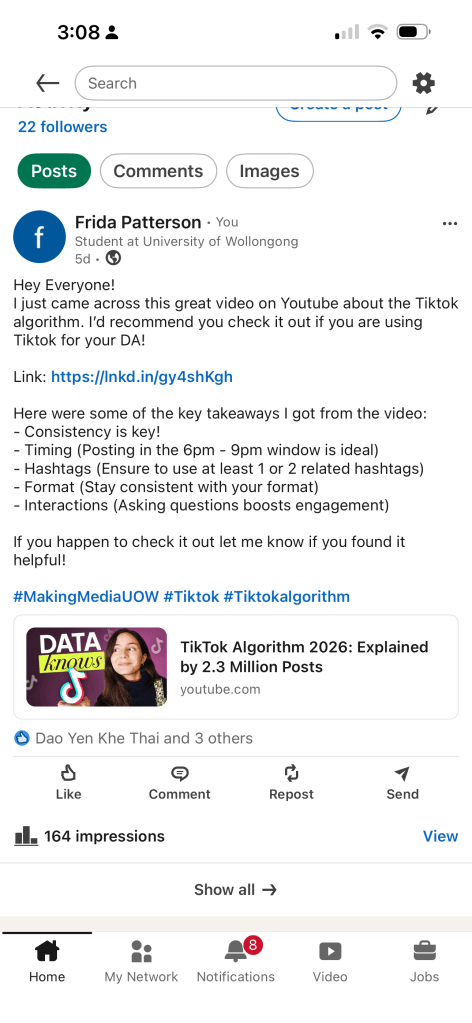
As far as picking a framing theme for my project, Viral Media stood out to me as the most suitable. As my goal was for my content to reach as many people as possible, it was essential for me to learn more about my chosen platform (TikTok’s) algorithm, and that I conducted research on techniques I could use to boost engagement. I found quite a few useful YouTube videos on this topic, one of which I shared on LinkedIn.
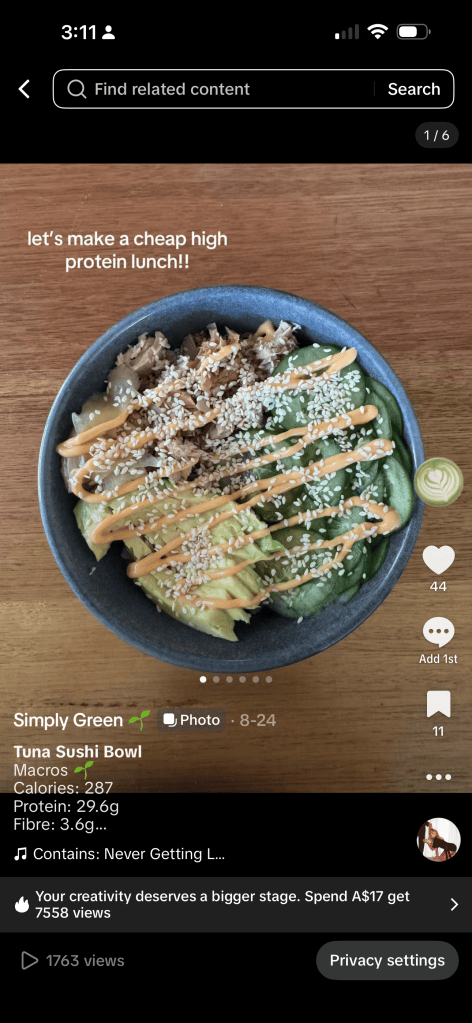
I kept my research in mind whilst creating my first recipe video, a photo carousel on how to make a tuna sushi-inspired lunch bowl. When taking the photos for my carousel, I ensured to keep them well lit so that it was easy for the viewer to see. I also wanted to make sure my photos were as aesthetically pleasing as possible to boost engagement. I took all my photos during the day using natural lighting and used a clean, empty wooden table as my background.
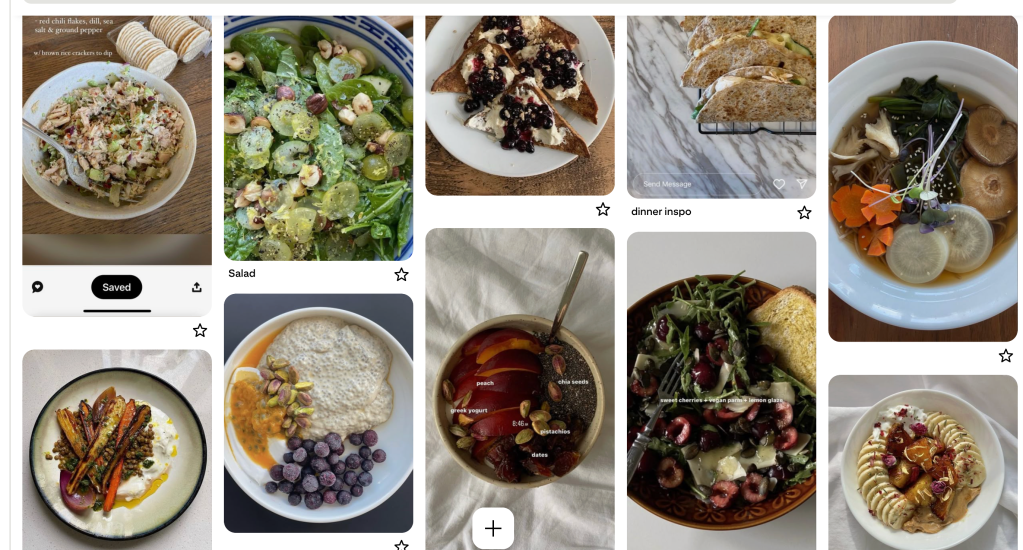
Prior to taking my photos, I created a food/ meal idea Pinterest board and looked at other food content on TikTok to garner an idea of what it is about food imagery that makes it look appealing and engaging. I noticed that a lot of this content had a few things in common: a clean look, a simple colour palette and that all these meals were nicely plated. So these were all things I ensured to keep in mind when taking the photos for my first videos.
Another engagement technique I incorporated into my first video was using related hashtags. Whilst it may seem self-explanatory, after conducting research, I learnt that using related hashtags is essential if you want to ensure that your content reaches the right audience. I used the following hashtags for my first video:

With all of that in mind, my first TikTok was up. I ended up garnering 1736 views, 44 likes, and 11 saves on the video, which I was fairly happy with considering it was my very first experiment. Looking at the post’s analytics, I found that most viewers who liked the post had viewed all 6 images, which was what I was aiming for. I also gained my very first follower from this post.
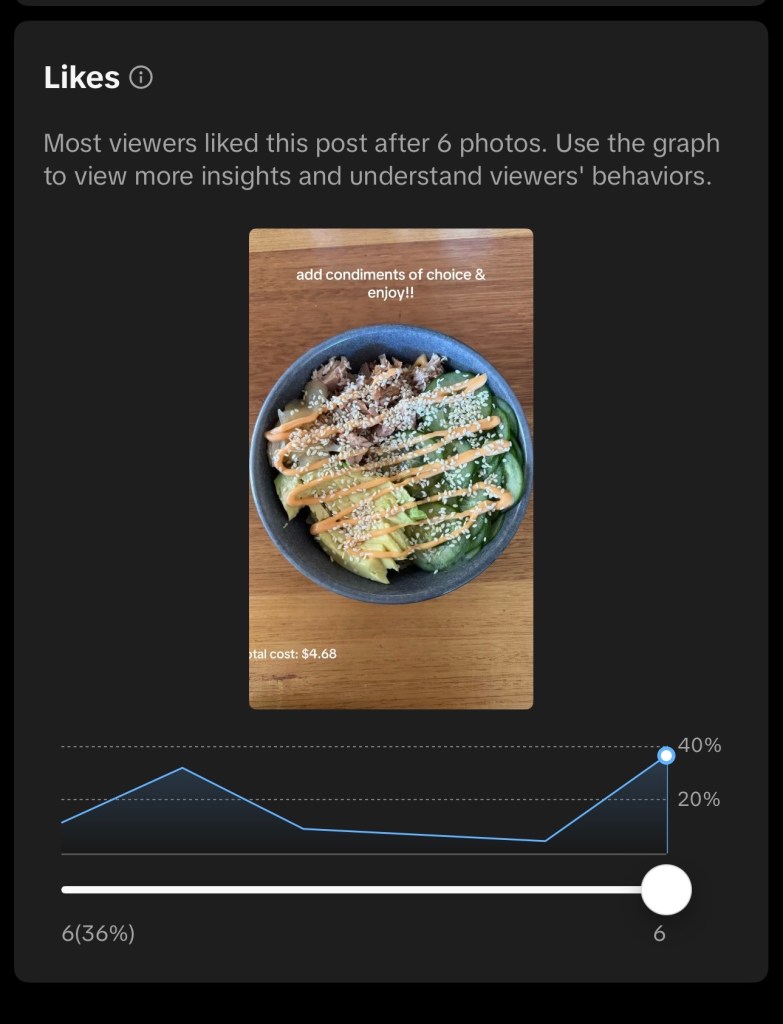
Unfortunately, however, it wasn’t all successful. The post’s analytics also showed me that most people stopped watching after viewing 2/6 images. So for my next post, I began to wonder what I could do differently.
For my next post, I decided to share one of my favourite ways to save on what could be considered an everyday expense: my morning matcha latte. With the average price of a cafe matcha being around $8, it’s no surprise that over time, what seems like a cheap morning beverage adds up. By making my matcha at home, I save around $5 per cup, so I thought this would be great to share on my TikTok page.
For this post, I also experimented with a couple of engagement-boosting techniques. I used relevant hashtags and well-lit images like my first post, but unlike my first video, I posted this one during the peak engagement window (6 pm – 9 pm). I also decided to switch up the font I used for these instructions to see if this would affect engagement in any way.
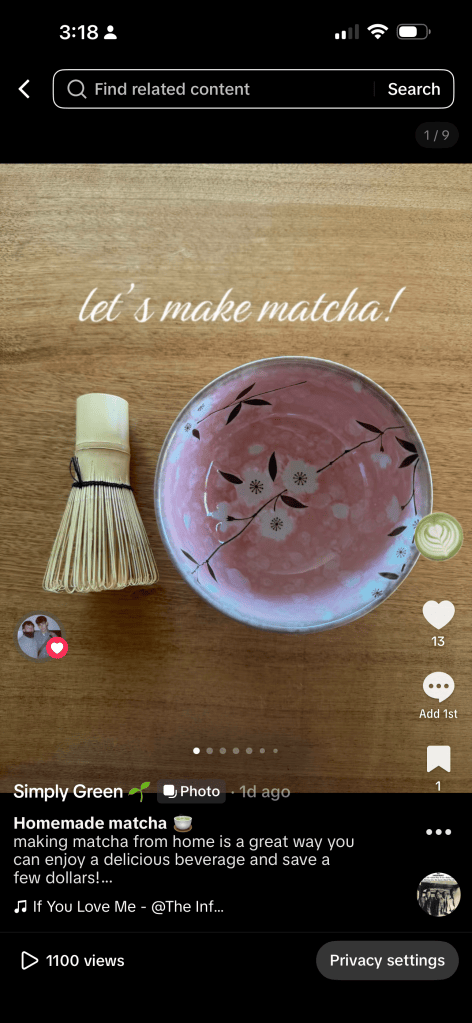
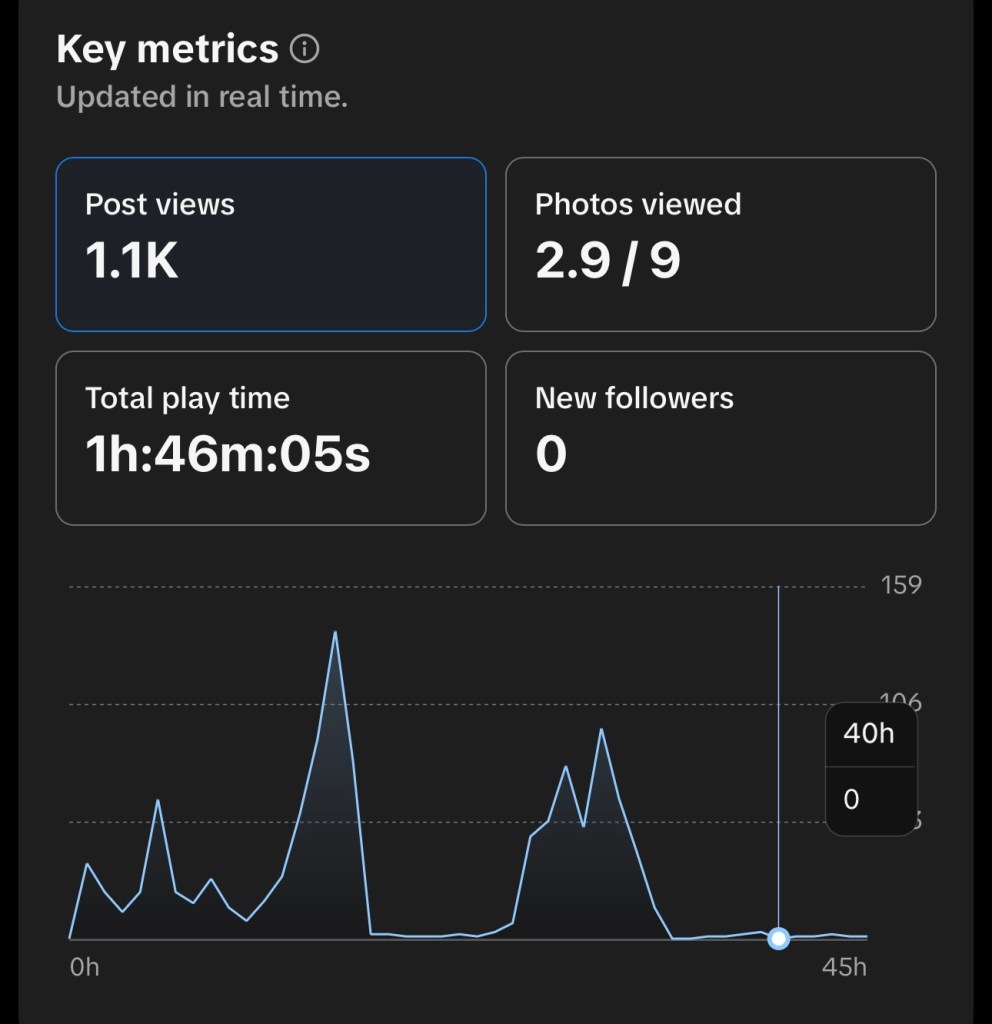
This post, a photo carousel demonstration of how I make a matcha latte, garnered 1100 views, 13 likes, and 1 save, drawing less engagement than my first post. Looking at the post’s analytics, I saw that most people viewed 2.9/9 images, 0.9 images more than my initial post. This experiment showed me that changing up small elements of a post, like the font, can affect audience engagement.
A key part of my development process was engaging in a peer discussion. The peer discussion allowed me to reflect on how my DA was coming along and to gain insight and advice from others regarding my project. Throughout the conversation, we each discussed our 3-stage development process and some of the challenges we were facing at the time. As my peers were also all using TikTok as the platform for their DA’s, we discussed how we were going about formatting our TikToks, and I found that some of my peers were also doing carousel posts. My peers also picked Viral Media as their framing themes, so we also discussed techniques we could use to boost audience engagement. Overall, I found the discussion helpful even though, at the time we recorded, I had only posted my first video. The conversation made me feel more confident about how I was going with my DA at the time, as I found that a lot of my peers were facing similar challenges.
Peer Discussion Link: Here
One of the most important lessons I learnt throughout the process is how unpredictable audience engagement is. Although I used fairly similar engagement techniques for each of my TikToks, they each received different numbers of views and likes. Beginning my digital artifact, I assumed that as long as I ensured my videos were visually appealing, I would be able to retain audience engagement. Through experimentation, I proved this theory wrong, as most viewers did not continue scrolling through the entire posts.
This process also showed me how important and useful analytics can be. By looking at the analytics of each of my posts, I felt that looking at the viewer retention statistics was much more telling than just looking at the view count alone. These analytics showed me that more could have been done to keep the audience engaged so they viewed the entire videos.
I also believe that my project did help contribute to SDG 2: Zero Hunger, but of course did not solve this goal. Through my project, I aimed to address only one of the aspects of food insecurity, that aspect being affordability, by promoting cheap and nutritious meals through my platform. However, I don’t believe a TikTok account is enough to solve the various larger causes of food insecurity, particularly in third-world countries. So whilst I do believe I contributed to the promotion of cheaper ways to eat, I was of course unable to solve world hunger as a whole.
Some advice I’d give to someone looking to start a similar project is not to assume your content will be successful just because it is visually appealing. As mentioned earlier, this was one of the things I learnt throughout my project. I’d also encourage you to look into the analytics of your posts, as they can be a very useful tool, allowing you to understand more about who your content is reaching and how they engaged with it.
Check out my DA: @simplyygreen on Tiktok
References:
United Nations 2025. Goal 2: Zero Hunger. United Nations Sustainable Development. Viewed 6 Sept. 2026. <https://www.un.org/sustainabledevelopment/hunger/>
 Frida Blog BCM 110
Leave a comment